
Showing posts with label race. Show all posts
Showing posts with label race. Show all posts
Tuesday, April 9, 2013
136: Richard Schein's Landscape and Race

Monday, April 8, 2013
113: Steve Hoelscher's Making Place, Making Race
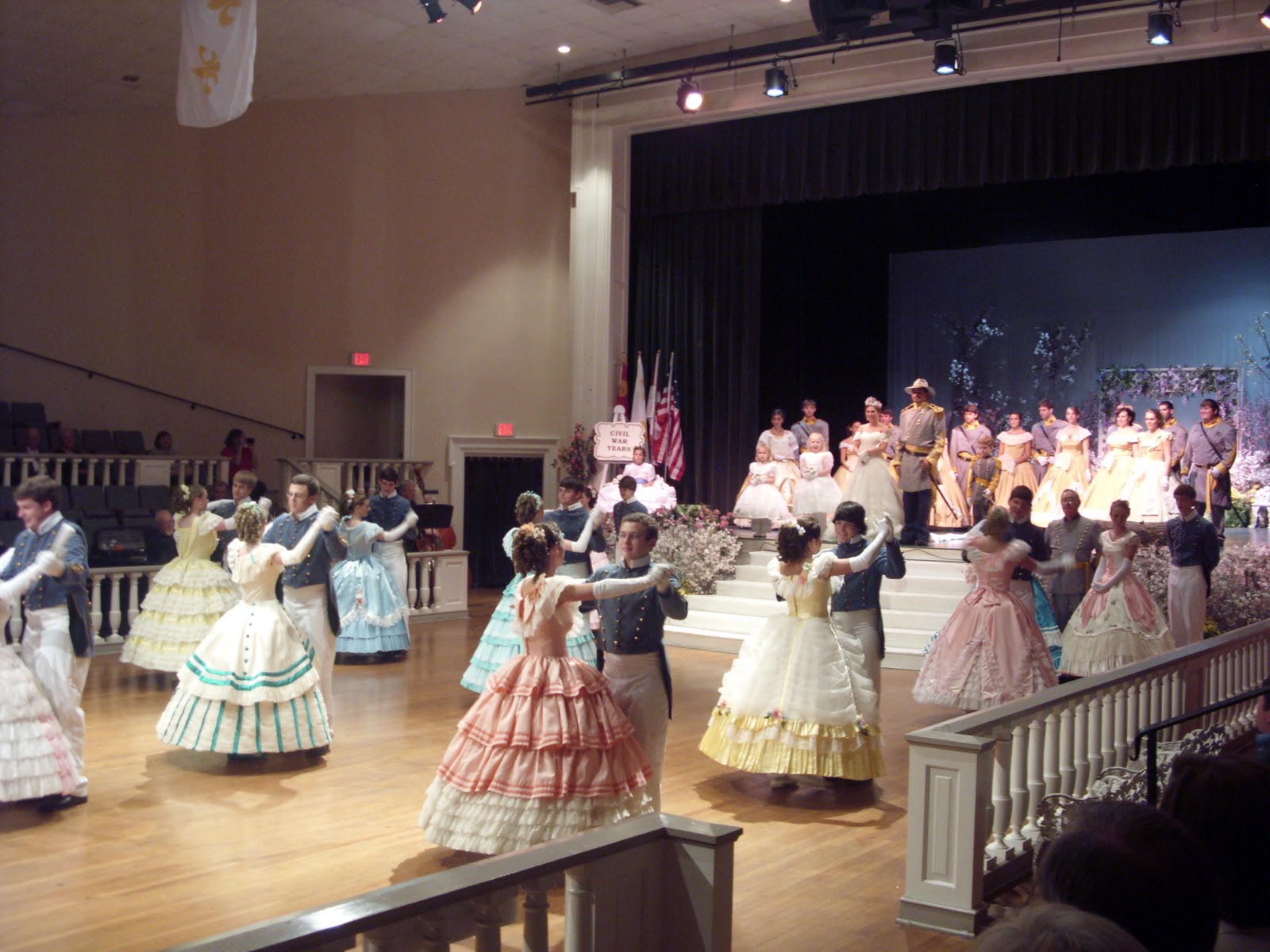
Hoelscher relies on a wide variety of sources, including ethnographic research and interviews in Natchez, archival sources, including pamphlets, letters, ads, and photos, and secondary and archival sources on lynching, residential segregation, and other evidence of racialization on the landscape.
110: David Delaney's Race, Place and the Law

Delaney argues that racism from 1836-1948 was spatialized, or enacted on and through the landscape, and supported by the legal system. Spatialized racism changed dramatically over time, however. Before the Civil War, it generally took the form of white territoriality versus black mobility - as evinced, for instance, in cases where
Sunday, April 7, 2013
107: Agee & Evans' Let Us Now Praise Famous Men

Let Us Now Praise Famous Men is, as Bill Stott argues, a beautifully-made 1930s documentary; Evans' photos have long since become iconic, and Agee's prose claims the entire beat generation as its descendants. Agee is also careful to situate himself and Evans as characters within the story of the tenant farmers' lives, so that the reader is clear throughout that the book combines objective reality and normative interpretation. The main argument of the book is encapsulated in the verse that serves as its title: "let us now praise famous men, and our fathers that begat us." The tension here is important: while the famous men lead us in creating history and are thus written down and remembered in history books, they are also responsible for the poverty in which his subjects live; while our fathers' names are never known to the world, they are arguably more important, because without fathers there would be no children, no next generation to pass history down to. Thus he celebrates the particularity of the human life of his subjects even as he critiques the universal structures that create it.
Saturday, April 6, 2013
97: Penny Von Eschen's Race Against Empire

88: Robin D. G. Kelley's Race Rebels

Kelley investigates black infrapolitics in a variety of 20th century settings and constructs: the double-edged sword of the "mask of grins and lies"in the pre-WWII South; African American Communists in the South and African American volunteers in the Spanish-American War; the zoot suits, bebop, and hipster ethic in the black male working-class culture of Malcolm X's youth and the gangsta rap of 1990s LA; bus protests long before Rosa Parks' formal resistance. In each situation, he locates resistance at a wide variety of scales, from enlisting to fight in a war or working to build the Communist party to walking, smiling, dressing, sitting, or singing in a certain way and in a certain time and place.
By focusing on infrapolitics, Kelley is able to situate now-famous protests like the Woolworth's sit-ins in a long tradition of extra-institutional, everyday resistance; as George Lipsitz points out, he is also able pinpoint the beginnings of social movements in everyday forms of resistance that overcome oppression even as they are structured by its particular spatial, economic, and cultural forms.
86: James Grossman's Land of Hope

Looking at the Migration from the perspective of black Southerners, Grossman discovers that the decision to move North was made by the migrants themselves, not by larger structural forces. The migrants evaluated the North based on the world they knew in the South, not abstract notions of equality. And initially, Chicago really was a land of hope: the city offered higher wages, more autonomy, the ability to vote, and better schools for their children than were available in the South. While some historians interpret the migration as a structural shift from rural to urban work, Grossman argues that it was a conscious move by black Southerners to gain opportunity and freedom.
85: Neil Foley's The White Scourge

Friday, April 5, 2013
82: Clay Carson's In Struggle

Clay Carson’s In Struggle: SNCC and the Black Awakening of the 1960s uses the trajectory of
SNCC’s radicalism in the 1960s both to analyze the black civil rights movement
as a historical struggle and to draw conclusions based on this struggle about
social movements more generally. He
divides SNCC’s history into three broad segments: formation of a grassroots
organization around the dual foci of non-violent protest strategies and
socioeconomic programs to help poor rural Southern blacks; organizational
centralization and internal strife related to a deepening understanding of the
extent of structural racism in the United States and conflict over whether
separatism or interracial collaboration would best address it; and a turn
toward generating black power ideology and away from social programs that
resulted in the failure of SNCC and a dissipation of the civil rights movement
more generally. As Carson assembles oral
histories, meeting transcripts, newspaper accounts, and other sources into this
general narrative, several historically contingent conclusions emerge. First and foremost, Carson argues that the
black civil rights movement (as SNCC) was most successful at effecting social
change early in the movement, when it was able to balance individual interests
with collective rights – hence Ella Baker’s “group-centered leaders” instead of
“leader-centered groups.” Further, developing an ideology is important for
sustaining a mass movement, but this ideology has to come from the ground up,
not from the top down. Hence, SNCC lost
its constituency when it moved away from localized social and economic programs
and toward flashy Black Power rhetoric.
And finally, Carson argues that radical separatism will not achieve
social equality as well as interracial cooperation or cooperation with more
liberal groups, both because it overemphasizes individualism and because it has
little basis in the material reality of most potential constituents. Carson’s history thus makes a compelling
argument for grassroots activism and a federated structure as two
characteristics of a successful social change organization.
73: John Kasson's Houdini, Tarzan, and the Perfect Man

Kasson's is not the first history of manliness at the turn of the century; his choice of a strongman, an escape artist, and a fictional character as subjects intentionally shifts the focus off of Teddy Roosevelt and politics and into an emergent mass spectacle culture. And because studies of mass culture at this time usually focus on representations of the female body, his choice to study male bodies is disruptive as well. In different ways, all three figures show how "modernity was understood in terms of the body and how the white male body became a powerful symbol by which to dramatize modernity's impact and how to resist it." They also show how masculinity at this time was closely related to ideas (and anxieties) about racial and sexual dominance.
Thursday, April 4, 2013
61: Alexander Saxton's Rise and Fall of the White Republic

Rise and Fall is framed around the rise and fall of different political parties in a three-stage dialectical process: the National Republicans or Whigs, whose emphasis on business-friendly hierarchy and racial hierarchy created a kind of structural "soft" racism; the Jacksonians, who combined active racism with the language of equal opportunity to create white populism; and the "Republican synthesis," which supported both white populism and business-friendly tariffs, infrastructural development, and expansion policies. Thus, the ideology of white racism developed out of elites' need to vindicate themselves for profiting from the slave trade and slave labor within the new Republic's democratic ideals.
Unlike Roediger, who argues that working class whites created racism as a way to feel better about their reduced economic and political power in early industrialization, Saxton argues that racism has a large top-down component: the populists use it to unite poor and rich whites into a single, popular class that erases white guilt for profiting off slavery. Sean Wilentz hammers this difference home when he argues that Saxton never quite explains why white workers would act against their own class interests and participate in a Populist ideological project. However, despite this very valid critique, Saxton's book compliments Roediger's by examining the process of racialization from an upper-class instead of a working-class position, and by showing that racism continued to operate in the US long after the need to justify slavery had been met because it helped solidify the power of various class coalitions.
60: David Roediger's Wages of Whiteness

This deceptively simple argument has several constituent parts, as Roediger pulls from an updated classical Marxism, new labor history, new social history, and theories of racism to delineate the development of whiteness and connect it to the formation of the working class in the early 19th century. Critical to his argument is the expansion of Marxist theory to include race: he argues that race cannot be reduced to class, and that the two social categories work in dialectic with one another. From the new labor/ new social history, he pulls the insistence that working class people are historical agents, not dupes controlled by capital, and that they are thus complicit in the construction of their own racism. And he builds on existing theories of race, racism and slavery (most notably George Rawick) to show that racism developed as a response to early 19th-century capitalist development, of which slavery was a constituent part: nostalgia for a pre-industrial past, combined with frustration at their own proletarianization, resulted in white working-class racism and hatred toward black slaves as emblems of both preindustrial peasants and industrial capitalist workers. From there, the step to racism as a constituent element of white working class identity was a small one.
The rest of the book includes two case studies that Roediger largely pulls from secondary sources: blackface minstrelsy as a way to provide an outlet for white racial tensions and frustrations; and the story of how the black Irish adopted racism against blacks to assume a white American identity. In both cases, Roediger shows how racism both constructs and masks the blackness that is at the heart of whiteness. While I was surprised to find that such an innovative and hugely influential thesis is built on secondary evidence and conjecture more than empirical research, I think the case studies illustrate Roediger's argument well, and I really like his innovative use of developments in studies of race, slavery, and the working class that came out of the new social history.
Wednesday, April 3, 2013
53: Evelyn Brooks Higginbotham's African-American Women's History

In the course of challenging the homogeneity of race and class, Higginbotham draws on plenty of cultural theory to analyze speeches and writings by black intellectuals and white feminist scholars, court cases, and histories of mostly 19th-century black experiences as well as some 20th-century examples. In the process, she historicizes the development of race as a tool of oppression that is rooted in slavery; because race thus signifies the master/slave relationship, it exists as ideology on top of class and property relations and conditions gender and sexuality. However, because race develops out of material relations of oppression between groups, it also serves as what Bakhtin calls a "double-voiced discourse:" race is simultaneously the language of black oppression AND black liberation. And, recognizing the liberatory possibilities of racial discourse, Higginbotham concludes with a call for black female historians to write race into gender by writing histories that open up spaces for agency; we will become fully human in and through discourse.
While I'm concerned about what feels like a cherrypicking approach in her choice of examples, and even more concerned that she seems to be more interested in discourse than in real, material actions and places, I think her call to look for the intersections and divisions in race and gender as categories can lead to very productive thinking about power in a more holistic way.
Tuesday, April 2, 2013
47: Edmund Morgan's American Slavery, American Freedom

Apparently the trajectory of Virginia's growth closely followed the pattern set out by Jack Greene in In Pursuit of Happiness: small and disorganized in Jamestown; then a tobacco boom starting in 1615, which creates huge disparities of wealth between planters and workers, as well as high mortality and increased individualism; then social stabilization from 1630 to 1680, when the mortality rate dropped and, despite Bacon's Rebellion in 1670, elites centralized control; and then the increased substitution of slavery after 1680, which solved the problem of freed indentured servants wanting land and, through racism, created a bond between lower and upper-class whites. And racism, combined with 18th century ideology of the common man and a dwindling number of non-landowning whites, froze social relations and neutralized dissent in a way that allowed elites to support freedom and slavery to be the thing that held freedom up.
This thesis - that freedom and exploitation are intertwined - seems like a pretty classic Marxist argument to me. What Morgan adds to the equation is the development of racism as a consciously applied tool of capitalist exploitation. I'm a little confused about how, exactly, racism comes about - do the elites invent it? Do the roving bands of unemployed former indentured servants invent it? Is is already in the air because of experience with Native Americans? But regardless of origins, this idea of racism as a tool of economic oppression is now pervasive in whiteness studies, so maybe he's on to something.
Sunday, March 31, 2013
34: Kaplan and Pease's Cultures of United States Imperialism

In her introduction, Kaplan is straightforward: she argues that we cannot understand American culture without looking at the interconnections between internal and external colonization, because in America, empire-building and nation-building go hand-in-hand. If Deloria argues that Indians are at the heart of American national identity, Kaplan takes that argument a step further and says that empire is at the heart of America; and unlike Deloria, who focuses on cultural play, Kaplan anchors her argument in the very real world of foreign relations, economics, and cultures of subjugating and subjugated peoples. In other words, taking over other countries and colonizing them is part and parcel of what it means to be America, and it has been that way since the colonial era.
Wednesday, January 30, 2013
30: Kathy Peiss' Hope in a Jar

I'm not trying to say that it's an unnecessary or uninteresting book - it's quite the opposite, actually. Hope in a Jar is a history of the American cosmetics industry "from the bottom up," and Peiss takes pains to show how women and minorities actively participated in and shaped beauty culture and the cosmetics industry that grew out of it. It's the first book to take this industry seriously by looking at it from this perspective; even better, Peiss is an American Studies scholar, so she does that thing where she tells you a lot about both her little slice of life and about its impact on American culture as a whole. Accordingly, Elizabeth Arden, Madame C.J. Walker and Mary Kay, among others, are portrayed as both intimately connected to the all-female networks, grassroots marketing strategies, and white-focused beauty standards developed in Americas beauty culture and savvy businesswomen who brought fresh ideas into American business culture. Therefore, after WWI, when the beauty business mushroomed (along with the rest of the economy) into a male-operated, mass-media behemoth, it was instrumental in bringing both female consumers and female businesswomen into the mass market, thus empowering women in the interwar economy.
Women were also empowered in those interwar years by the application of makeup itself. Rather than succumb to sedate mass-market beauty prescriptions, women followed the lead of their favorite actresses and painted up; bobbed hair, short skirts, and rouged lips and cheeks defied authority and emphasized women's sex appeal. How better to celebrate their new status as equals in the marketplace than by asserting their physical presence and personal autonomy?
Right. Here's where my inner grump comes in: even if makeup can be seen as liberatory (which, hey, in the 1920s it probably was), it still focuses the attention on a woman's body, on appearances, on sexuality. At the risk of sounding like a generation-late Andrea Dworkin or a watered-down Maureen Dowd, women are always already seen as sexualized bodies, so emphasizing those bodies isn't particularly subversive. And anyway, the slide back from subversive subject to sexualized object is just too easy when both take the female body as their reference point.
But I digress. That kind of feminism definitely had its place, and Peiss' book is good at exploring its empowering intersections with mainstream beauty culture.
29: Joy Kasson's Buffalo Bill's Wild West

Kasson uses a lot of interdisciplinary hoopla to achieve her goal, but basically, her argument goes like this. Buffalo Bill's Wild West Show was enormously popular starting in the 1890s, and its producers constantly tweaked it to incorporate both audience feedback and topical stories, so we can safely consider it embedded enough in turn-of-the-century American culture to have both affected and reflected the mood of the times. Further, the show presented itself as both authentic history and spectacle, and Buffalo Bill himself was both a real person and a widely-publicized invented celebrity. By walking a very hazy line between fact and fiction, the show started an enduring link between American history and popular culture, where history becomes a spectacle created by the people for their own edutainment. Conflicts, wars, even struggles with Native Americans get whitewashed; in the name of pleasure, even the bloodiest battle scenes end with Indians - yes, real Indians! - and Anglos reconciled to the applause of the audience at the end of the show.
And finally, from history as edutainment, it's but a few short steps to national identity as edutainment: to paraphrase my friend Jessica, we like the lies we tell ourselves; if we tell them enough, eventually we come to believe them.
I like this book because it is readable, but also because it still rings true today. Have you been to Disneyland? Seen Lincoln?
Wednesday, January 23, 2013
24: Laura Pulido's Black, Brown, Yellow and Left
Laura Pulido squeezes several agendas into this book. As an LA activist who worked with an antiracist, anticapitalist group called the Labor/Community Strategy Center to organize a multiethnic left, she is interested in learning from the history and mechanics of previous multi-racial organizing attempts; she is also interested in fostering a class-based leftist politics among her readers. As a scholar, she is fascinated by the sixties and frustrated that histories of radicalism in that period are either mostly white or centered around the Black Panther Party, so she wants to expand the history of racial/ethnic activism to incorporate more of LA's racial and ethnic groups; and she wants to complicate racism by breaking down the black white binary and investigating racial hierarchies and collaborations (or not) in the people she is studying.
 Therefore, Black, Brown, Yellow and Left is part history of the Third World Left, part empirical study of what she calls "differential racism," and part analysis of the growth, development, and decline of a social movement. Pulido accomplishes all of these goals via a comparative analysis of left-leaning activism among three racial/ethnic groups in LA in the late 1960s and early 1970s, using three organizations as stand-ins: the Black Panther Party for African Americans; East Wind, a Japanese American group, for Asian Americans; and CASA, a Chicano/a group, for Latino/as.
Although the details of each case make for good reading, her historical conclusions about the relationship between race/ethnicity, racism, and Left activism reveal the complexities of the Third World Left. Her study of the Black Panther Party suggests that their two main concerns of self-defense and community service were directly related to African American racialization (as the 'Other' to whites, they were at the very bottom of the racial hierarchy and over-policed) and their class position as urban poor. CASA, by contrast, focused on labor organizing and immigration issues reflected Chicano/as position as a 'problem minority': their racial status and particular historical experiences as immigrants and low-wage workers meant that they were a needed part of the economy, but only as subordinated and exploited workers. And as a Japanese American group in a multiethnic, multi-class Asian American community, East Wind focused on issues of identity, community service, and solidarity work; their activities reflected their mixed economic position and their status as a 'middle minority.'
Though Pulido found enough connections among groups to indicate a relatively coherent Third World Left, she quickly discovered that these connections were rather thin. All three organizations were interested in the connection between their own identity as a racial or ethnic 'nation' and anticolonial struggles worldwide, and all three were fighting racism and economic exploitation at home, but they were unsure how to work with other communities in LA. This uncertainty had a lot to do with the complex racial hierarchies in LA at the time: African Americans, for instance, were at the bottom of the social hierarchy, but through the millitancy and visibility of the Black Panther Party they were at the top of the social movement hierarchy. Uncertain positioning, as well as uncertainty regarding the status of one's own group, made lasting coalitions difficult.
Pulido argues that despite a strong need for a multiethnic left today, the situation is much the same as it was in the 1960s and 1970s: strong ethnic groups with weak connections among them, and a weak Third World Left as a result. Despite some issues with scope (using a single organization to stand in for all ethnic/racial organizing, for instance), Pulido's book provides a thoughtful analysis of the intersections between race and class in LA that may well be a useful guidebook for folks trying to build political capital today.
Thursday, January 10, 2013
14: W.E.B. Du Bois' The Philadelphia Negro

Du Bois was kind of a badass. He only had enough funding from U-Penn to spend a year on this study and not enough to hire anyone to help him, so he personally interviewed thousands of Philly's black residents and then compiled all of the data himself. Where possible, he also compared the trends he found in his data to data from similar studies. I have no idea how he slept or when he ate.
The results of this study, and Du Bois' interpretation of them, are freakishly similar to conditions and interpretations today.
His map of the 7th ward, for instance, where roughly 40% of Philly's black population lived, shows evidence of enforced segregation, as black homes and white homes are rarely on the same block, and black families pay more for poorer housing than do white families.

The map also shows evidence of social stratification within the black community, as middle-class black families may live on the same tree-lined sections of Lombard street as working-class families, but the poor and the "vicious and criminal classes" are concentrated in alley tenements and in Minister Street between 7th and 8th.
His study of death rates and causes of death shows that the black population has much higher death rates than does Philly's population at large, that the highest death rates are in wards with the poorest sanitation and most overcrowding, and that the majority of these deaths (outside of stillbirths) are from diseases directly related to these poor living conditions: consumption, pneumonia, and urinary tract infections.
And his study of occupations and demographics shows that though the community does have its share of professionals and middle-class workers, the vast majority of black workers are employed in domestic service, and no one works in industry - an occupational composition he attributes to discriminatory hiring practices and industrial union racism.
Even though it was written more than a century ago, this book feels like contemporary work by William Julius Wilson or Massey & Denton, who argue, like Du Bois, that restricting housing and employment opportunities for an entire group of people and then blaming that group for being slow to raise itself out of poverty is racist, illogical, and unfair (not to mention essentialist and just plain ridiculous.) That Du Bois' work languished in obscurity for almost fifty years due to that same racist, illogical, and unfair mindset, and that the problems he addressed empirically a century ago are still issues today - well, I can't think of any more frustrating or more powerful evidence of the enduring power of fear, racism, and hate.
Wednesday, January 2, 2013
3: Massey & Denton's American Apartheid

2 for 2 today! Huzzah!
As the title suggests, American Apartheid: Segregation and the Making of the Underclass is both sociological (the "underclass") and a bit polemical ("apartheid") about the relationship between black urban poverty and the "American institution" of the black ghetto. Their book is clear, easy to read, and incredibly strident in its arguments. They're also well-supported by the National Institute of Child Health and Human Development, a Guggenheim grant, a Faculty Development Award, and the National Opinion Research Center, which means that they had enough money to hire plenty of researchers and analysts. And it shows: the depth of research in this thing is impressive.
The authors' argument is pretty straightforward: more than any other factor, race-based residential segregation creates the "urban underclass," a segment of the urban population so socially and spatially isolated from the labor market that they seem to have no chance of climbing out of poverty. The primary instrument of segregation is the urban ghetto, and the residents are almost exclusively black.
Urban ghettos have been fascinating to me ever since I biked through them in Chicago in the early 2000s - I couldn't figure out why anyone would live in an intensely poor, dilapidated neighborhood when a much nicer one was sometimes just a few blocks away. The two books that provided the strongest answers for me back then were Alex Kotlowitz' There Are No Children Here and William Julius Wilson's When Work Disappears; the first provides an intensely human look at growing up in a Chicago housing project, and the second provides clear, well-supported structural explanations for the development and persistence of the ghetto.
American Apartheid basically builds on Wilson's argument. Wilson argues that shifts in the economy contributed to urban economic decline and the creation of new jobless ghettos. Discriminatory housing practices combined with discriminatory hiring practices concentrated black urban residents into poor, predominantly black neighborhoods, so when shifts in the economy (like automation in the auto industry, for instance) threw blacks out of work, whole neighborhoods went under. Shops closed, community institutions left, and the ghettos became so thoroughly separated from the rest of society that they formed their own norms, expectations, and speech patterns.Seeing this decline, those families that could leave, did, which left the poorest residents marooned in inner city slums without employment prospects or transportation to jobs in the suburbs or other parts of the city.
Massey & Denton add to this line of logic an emphasis on residential segregation. If these same black people were living in integrated neighborhoods, the authors argue, their white and ethnic neighbors would probably still have jobs in an economic downturn, so their neighborhood institutions, shops, etc would be able to stay open, the neighborhoods would remain relatively stable and connected to the workforce, and those thrown out of work would eventually be able to find jobs again. However, even in the late 1980s (when they were writing), most white people did not want black people in their neighborhoods, violence and intimidation was still rampant, and the Fair Housing Act was still really hard to enforce. Thus, segregation was the key contributing factor to black isolation and poverty. And since the authors see residential integration as the first step toward social integration, their solutions to these problems are stronger, more systematic enforcement of the Fair Housing Act and active dismantling of urban ghettos.
Since this book was written, several major changes have taken place: in an effort to break down the ghetto, cities like Chicago have replaced their massive (and massively deteriorated) public housing projects with mixed-income housing and city-wide HUD vouchers; the rise of a creative class sensibility has brought white middle class people to the ghetto in search of authenticity and cheap rent; and gentrification processes have massively transformed inner city neighborhoods in a kind of forced resegregation (from black to white.)
Given these processes, does the residential segregation aspect of the urban ghetto still stand? Or, more bluntly: have these processes of desegregation/ resegregation done anything positive for the plight of the urban poor?
Subscribe to:
Comments (Atom)