In Landscape and Memory, Simon Schama argues that "even the landscapes that we suppose to be most free of our culture may turn out, on closer inspection, to be its product," and that this mutually constitutive relationship between nature and culture is "a cause not for guilt and sorrow but celebration." Accordingly, while Landscape and Memory digs deep into the histories of a wide variety of landscapes, Schama's is an "archaeological" method rather than a critical one. His goal is not to expose capitalist exploitation in the landscape but to dig deep "below our conventional sight-level to recover the veins of myth and memory that lie beneath the surface." By situating landscape myths in their historical-cultural moments, Schama shows how socially-constructed meaning and memory become embedded in a landscape.
Schama applies his archaeological approach to a variety of landscapes: the primordial Bialowiez forest in Poland, which the Germans wanted to raze and replace with "a great, living laboratory of purely Teutonic species: eagles, elk, and wolves" (and bison) during WWII, because it was the symbolic and heart of Poland; Gianlorenzo Bernini's Fountain of the Four Rivers in Rome as an embodiment and co=optation of the ancient obsession with circulation and flow; Mount Rushmore and sculptor Gutzon Borglum's obsession with dominating nature by carving human heads into stone; and "both kinds of arcadia, the idyllic as well as the wild," as escapist "landscapes of the urban imagination," responding to cities by providing pandemonium when cities are too ordered and bucolic countryside when cities are too chaotic.
Throughout, Schama relies on a narrative form to weave many disparate threads into each chapter's coherent whole. This book is neither a call to action nor a complete history of particular places nor even a landscape study; it's more of a literary exploration into the layers of myth and memory that make up a landscape, arranged by a subjective narrator into layers of his own choosing. While it's a lovely read, it does make me wonder whether Schama thinks the physical landscape needs to be there at all.
Showing posts with label memory. Show all posts
Tuesday, April 9, 2013
131: DW Meinig's Interpretation of Ordinary Landscapes
The Interpretation of Everyday Landscapes: Geographical Essays is a collection of landscape studies edited by DW Meinig. It represents a conscious effort to complicate the cultural landscape and reclaim it from the abstractions of science, in a way that both respects the visual nature of landscape and takes advantage of its discursive possibilities.
In his Intro, Meinig defines an ordinary landscape as a continuous surface created by and through the "routine lives of ordinary people." But it's also not that simple: landscape is a coherent unity of physical, biological, and cultural features; it has both functional and aesthetic components; it is more visual and panoramic than an environment, but less subjective and experiential than a place; and it is both a geographical formation and a representation, a history and a text, a symbol and an accretion of meanings. Landscape is both space and meaning; it doesn't exist without interpretation.
The essays in this collection generally support Meinig's rather complex definition of landscape as a field of study. A few highlights:
In his Intro, Meinig defines an ordinary landscape as a continuous surface created by and through the "routine lives of ordinary people." But it's also not that simple: landscape is a coherent unity of physical, biological, and cultural features; it has both functional and aesthetic components; it is more visual and panoramic than an environment, but less subjective and experiential than a place; and it is both a geographical formation and a representation, a history and a text, a symbol and an accretion of meanings. Landscape is both space and meaning; it doesn't exist without interpretation.
The essays in this collection generally support Meinig's rather complex definition of landscape as a field of study. A few highlights:
Labels:
Cultural Geography,
discourse,
history,
landscape,
meaning,
memory,
objectivity,
preservation,
space,
subjectivity,
symbolic,
text,
visual space
129: Dolores Hayden's The Power of Place
Dolores Hayden's The Power of Place: Urban Landscapes as Public History is a reflection on 8 years of work at her Boston nonprofit The Power of Place, which she started in 1984 to "to situate women’s history and ethnic history in
downtown, in public places, through experimental, collaborative projects by
historians, designers, and artists." Written for academics, fellow practitioners, and the general public, The Power of Place shows how collaboratively-produced public art can bring together urban space and urban history in new, generative ways, while also identifying and preserving significant public places from changes in the configurations of capital. With the increasing interconnectedness of cities and the rise of placelessness, Hayden argues, an urban landscape history that accesses and generates "place memory" is the surest route to recovering both a sense of place and the historical agency/ capacity for social change that comes with it.
Labels:
collaboration,
community,
Cultural Geography,
culture,
history,
landscape,
memory,
place,
placemaking,
preservation,
struggle,
vernacular
Monday, April 8, 2013
125: Kenneth Foote's Shadowed Ground
In Shadowed Ground: America's Landscapes of Violence and Tragedy, Kenneth Foote examines the treatment of spaces of violence and tragedy in the US to see how the relationship between private grief and larger national narratives is encoded and shaped by the landscape. His (many) case studies include the Revolutionary and Civil Wars; the first slave arrival (in 1619), mass murders, political assassinations, violent labor and race riots, transportation accidents, fires, floods, and explosions; he argues that "the decision to render sites visible/ invisible
reflects a deliberate choice regarding issues of meaning and identity." Shadowed Ground thus contributes not just to the recovery of American history in the landscape, but to the exploration of the relationship between space and memory.
Foote argues that responses to tragic sites generally fit somewhere along this continuum, keeping in mind that the categories are not fixed:
Labels:
Cultural Geography,
identity,
landscape,
memory,
narrative,
nationalism,
sacred,
space,
symbolic
115: Lucy Lippard's The Lure of the Local
Lucy Lippard's The Lure of the Local is a swan song to the hybridity of place - temporal and spatial, personal and political, geographical and psychological, lived and imagined, insiders and outsiders - and to the ways in which art, particularly public art, can mediate place's connections between land, history, and culture. For Lippard, lived experience is central to the construction of place, as are the accumulated sedimentations of experience, memories, and connections in a place. If space is a memoryless landscape, place is a landscape mediated by human experience.
In an increasingly globalized world, for Lucy Lippard, the "lure of the local" is
the pull of place that operates on each of us, exposing our politics and our spiritual legacies. It is the geographical component of the psychological need to belong somewhere, one antidote to a prevailing alienation. The lure of the local is that undertone to modern life that connects it to the past we know so little and the future we are aimlessly concocting.
In an increasingly globalized world, for Lucy Lippard, the "lure of the local" is
the pull of place that operates on each of us, exposing our politics and our spiritual legacies. It is the geographical component of the psychological need to belong somewhere, one antidote to a prevailing alienation. The lure of the local is that undertone to modern life that connects it to the past we know so little and the future we are aimlessly concocting.
Labels:
art,
Cultural Geography,
hybrid,
landscape,
lived experience,
local,
memory,
place,
place and region,
region,
sedimentation,
subjectivity
113: Steve Hoelscher's Making Place, Making Race
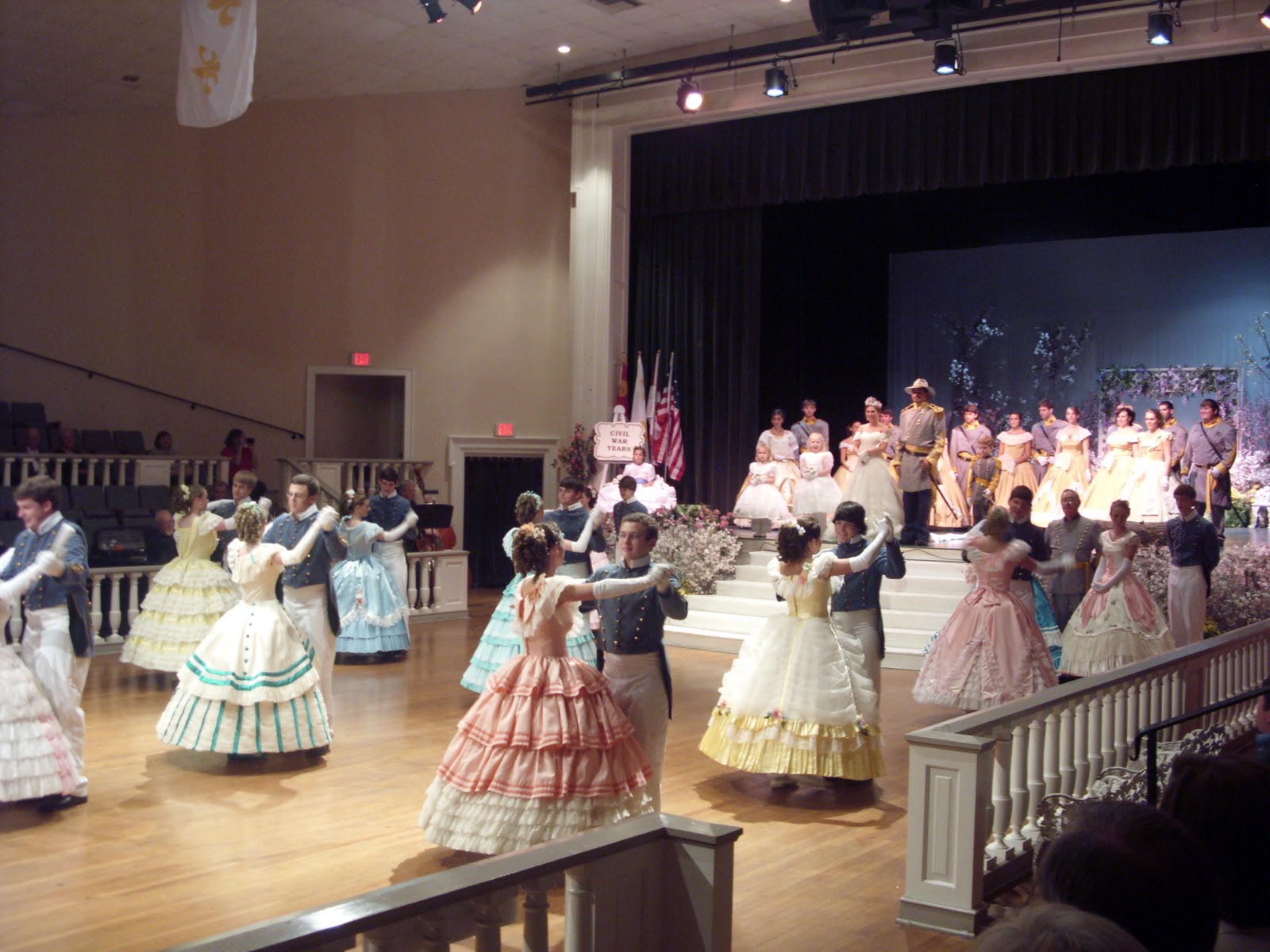
In "Making Place, Making Race: Performances of Whiteness in the Jim Crow South," Steve Hoelscher uses the landscapes and performances of white Southern memory in Natchez, Mississippi to show how a dominant group created a culture of segregation that far exceeded its legal boundaries, and how racialization of "everyday geographies" is constantly being both upheld and reworked. Hoelscher argues that modern American race relations have roots in the Southern past and especially in the Jim Crow past, so understanding the processes of Natchez' production of race in the landscape can help us understand racialization of American landscapes more generally.
Hoelscher relies on a wide variety of sources, including ethnographic research and interviews in Natchez, archival sources, including pamphlets, letters, ads, and photos, and secondary and archival sources on lynching, residential segregation, and other evidence of racialization on the landscape.
Labels:
1930s,
1960s,
African American,
Cultural Geography,
heritage,
memory,
performance,
place,
place and region,
race,
the South,
whiteness
Subscribe to:
Comments (Atom)