Showing posts with label interdisciplinary. Show all posts

Monday, April 8, 2013

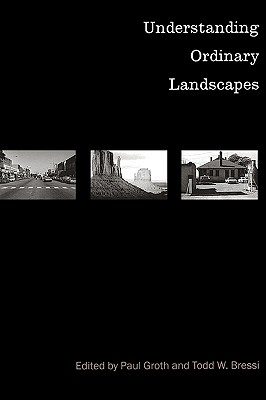
126: Groth & Bressi's Understanding Ordinary Landscapes

The essays in Paul Groth and Todd Bressi's collection Understanding Ordinary Landscapes are compiled from a two-day symposium at Berkeley in 1990 called "Vision, Culture, and Landscape" that was intended to both celebrate and critique JB Jackson's version of cultural landscape studies.  In general, while the essays underscore Jackson's reliance on and use of visual and spatial information as a way to understand past and present cultures, they grapple with ways to deal with the realities of social and cultural pluralism and their effects on the landscape.  While in many ways Jackson's work was radically subjective and Postmodern before its time, in others it is distinctly Modern, particularly in its emphasis on underlying universals, empirical research, and continuity.

According to Groth, cultural landscape studies defines landscape as the combination of people and place, with an emphasis on the history of how people have used everyday or vernacular space - buildings, rooms, streets, fields, yards - to establish and articulate identities, social relations, and cultural meanings.  When JB Jackson started publishing Landscape in 1951, he also emphasized the activist mission of cultural landscape studies: the more people know about ordinary environments, the more they will become attached to them and the less likely they will be to wantonly destroy them.  Groth and Bressi build on cultural landscape studies via a 6-part framework updated for the 1990s:

  1. focus on ordinary landscapes to get at cultural meaning and environmental experience
  2. shift from a rural emphasis to both rural and urban landscapes, as well as landscapes of production and landscapes of consumption
  3. continue to study diversity and uniformity, but emphasize difference, fragmentation, intertextuality and hybridity instead of a single, unifying narrative
  4. continue to write for the intelligent lay reader
  5. support a broad notion of interdisciplinarity that includes cultural, human, social, critical, landscape architecture, art history and other approaches
  6. engage with visual and spatial information, either in support of or in direct opposition to it; the landscape must remain the primary object of study.  Respect JB Jackson's argument that "landscape... must be regarded first of all in terms of living rather than looking."
This collection includes many heavyweights: David Lowenthal, Peirce Lewis, Dolores Hayden, Wilbur Zelinsky, and more - all folks who are contributing to and thinking about what a new cultural geography might mean and how it might be updated to include social difference and PoMo cultural theory.  It also holds up JB Jackson as the methodological exemplar of cultural landscape studies - which makes sense, because as far as I know, he invented it.

Sunday, April 7, 2013

105: Price & Lewis' Reinvention of Cultural Geography (with responses)

Price & Lewis

Judging from the rather surprised and defensive responses from Denis Cosgrove, James Duncan, and Peter Jackson (below), Price and Lewis published "The Reinvention of Cultural Geography" in 1993 to start a fight.  In their article, Price and Lewis identify a new strain in cultural geography called "new cultural geography," which critiqued a "traditional cultural geography" that they associated with the Berkeley School.  While the authors commend the new cultural geographers (NCGs) in their adoption of cultural theory, they argue that they paint an unfair picture of the Berkeley School.  Against the NCGs, Price and Lewis argue that:

  • the Berkeley School was not "statist, empiricist, and obsessed with relict landscapes and material artifacts;" it was, and still is, "dynamic, predominantly historicist, and interested primarily in the relationships between diverse human societies and their natural environments."
  • few if any Berkeley School geographers or even "traditional" cultural geographers have ever conceptualized culture as "superorganic;" cultural geography has always been a "pluralistic endeavor ultimately oriented to empirical issues."
Optimally, the authors would like to see the "new" and "traditional" schools merge, so that cultural geography as a whole could benefit from the awesome mind meld of social theory, empirical research, and historical depth that would likely result.

Friday, April 5, 2013

74: David Levering Lewis' Biography of a Race

David Levering Lewis' W.E.B. Du Bois: Biography of a Race, 1868-1919, is a massive popular biography of Du Bois and one of two planned volumes on his life and work.  Lewis takes "biography" in two different directions: as a writer who focused on recovering African American voices and reconstructing their agentive participation in their own history, Du Bois was a biographer of a race; as a person who was born right after the Civil War and who died during the Civil Rights movement, his life can also be used to trace the trajectory of an oppressed group from slavery to freedom (and, for Du Bois, on to Africa.)  Therefore, the book is both a deeply contextualized biography of Du Bois' life, career, and work, and an attempt to recreate the massive political, social, and economic changes impacting the lives of black Americans during his lifetime.

Biography of a Race belies a huge amount of research, and Lewis spends a great deal of time reconstructing Du Bois' rather "prickly" personality and his tendency toward separatism as he got older. Working from Du Bois' personal papers, he works to humanize him, so that we see his troubled childhood, his difficult relationships with his wives, and his philandering tendencies in plain relief.  And he includes a full 8 chapters on Du Bois and the NAACP, including his frustration with Booker T. Washington and the "accomodationist" Tuskegee Institute.  He also traces the shift in Du Bois' thought around the turn of the century from a "naive" faith in science's ability to solve racial inequality to the more political route of the NAACP.  And he ends - rather precipitously - during the "Red Summer" of 1919.

While this book really helps humanize Du Bois, Lewis' strategy seems to be to keep in every detail, no matter how small, and he often includes several versions of the same story rather than working to figure out which pieces seem the most well-supported.  Further, his chatty speculations and asides sometimes detract from his larger point, as when he offhandedly suggests that a white woman living with him and his wife might have been a boarder - or perhaps the three were involved in a menage a trois.  He also apparently went to a psychoanalyst in the guise of Du Bois by way of interrogating his psyche.  I appreciate the humanization of the subject, but I do wish Lewis or his editor had been a little more careful.

Tuesday, April 2, 2013

46: Perry Miller's Errand into the Wilderness

Perry Miller's Errand into the Wilderness is the book (according to Amy Kaplan, anyway) that started the field of American Studies.  Miller wanted to find out what was exceptional about America and to see if he could get some insight into the "American Mind" (aka culture), and he realized while loading barrels of oil in the Belgian Congo that the best way to do that would be to check out our origins.  Therefore, he returned to graduate school and started studying the Puritans.

According to Miller, the Puritans came to America of their own accord, with the errand of forming a perfect society in America so that Europe would see it as a model and invite them to go home and rule England.  They were god's chosen people, creating Winthrop's "city on a hill" in the wilderness of America for the benefit of corrupt old Europe.  But not long after they left, conditions in England changed, and the eyes of Europe were no longer upon them; they then had to figure out what their errand was.  And they decided to build a godly community in the wilderness, for their own benefit.

For the first generation, the wilderness is less a shaping factor than a backdrop for the social shaping of the errand.  For the second and third generations, however, the wilderness, which was analogous to leaving the community and falling from grace, became more and more a part of who they were.  The jeremiads of these generations, which enumerated their sins and exhorted them to return to god, functioned as a kind of confession that allowed them to keep sinning - or, as Miller sees it, to keep integrating themselves into the wilderness, and thus to form a new kind of American culture.

Part of what was so revolutionary here was Miller's method: he combined close reading of primary sources with an attempt to situate them in the Puritans' material world; in an era of New Criticism, he was an early proponent of interdisciplinarity.  While the centrality of New England, the theory of a unitary American culture, and American exceptionalism more generally have long been discredited, this method, along with Miller's incredibly entertaining good-old-boy style, his interest in the connection between landscape and culture, his understanding of the connection between Old World and New World cultures, his understanding that culture proceeds dialectically with its environment and by generation, and even his interest in the "internal logic" of a culture all still inform American Studies today.  He was a smart guy, that one.

44: Jill Lepore's King Philip's War

Jill Lepore's The Name of War: King Philip's War and the Origins of American Identity argues that all wars are contests for meaning, and that the peculiar characteristics of King Philip's War, especially that it was a frontier war between literate and non-literate peoples, make it a critical moment in the formation of a uniquely American identity.

King Philip's War was a frontier conflict between Native Americans and colonists in what is now New England between 1675 and 1678.  Also called Metacom's Rebellion, King Philip's War was the deadliest per capita battle on American soil.  Lepore reconstructs this battle by reading accounts of it from the perspectives of both colonists and Indians, and as a result the book is a much larger study of a war between two cultures, literate colonists who fight with words, and Indians, both literate and illiterate, who write in "blud not ink." The book is also an analysis of the ways in which these binaries break down in war, so that sometimes colonists take pleasure in torturing Indians instead of trying to translate pain into language, and sometimes Indians make their frustrations legible by destroying property or stripping and scalping colonists in a kind of symbolic, rather than pleasurable, "denuding," or erasure of the social meaning the colonists had given the land and themselves.  Further, in theatrical representations of this war in the 1800s, the roles switch, so that Americans are playing Indian and representing Philip as a noble savage, and Native American tribes go through American legal channels to preserve their identity.  American identity is thus intimately connected to language, to the frontier warfare early colonists fought, and to the Native Americans themselves.

Throughout The Name of War, Lepore is careful to anchor her analysis of "text" in the material world of bodies and landscape, actions and objects; the book is thus both a part of the discursive turn and a reaction to it.  It is also thoroughly interdisciplinary in both source and method, as much a work of literary analysis as a work of history.  I don't feel like this kind of sustained, thorough engagement with both texts and the material bodies and spaces and actions that produced them happens nearly as often as it should.