Hoelscher relies on a wide variety of sources, including ethnographic research and interviews in Natchez, archival sources, including pamphlets, letters, ads, and photos, and secondary and archival sources on lynching, residential segregation, and other evidence of racialization on the landscape.
Showing posts with label performance. Show all posts
Monday, April 8, 2013
113: Steve Hoelscher's Making Place, Making Race
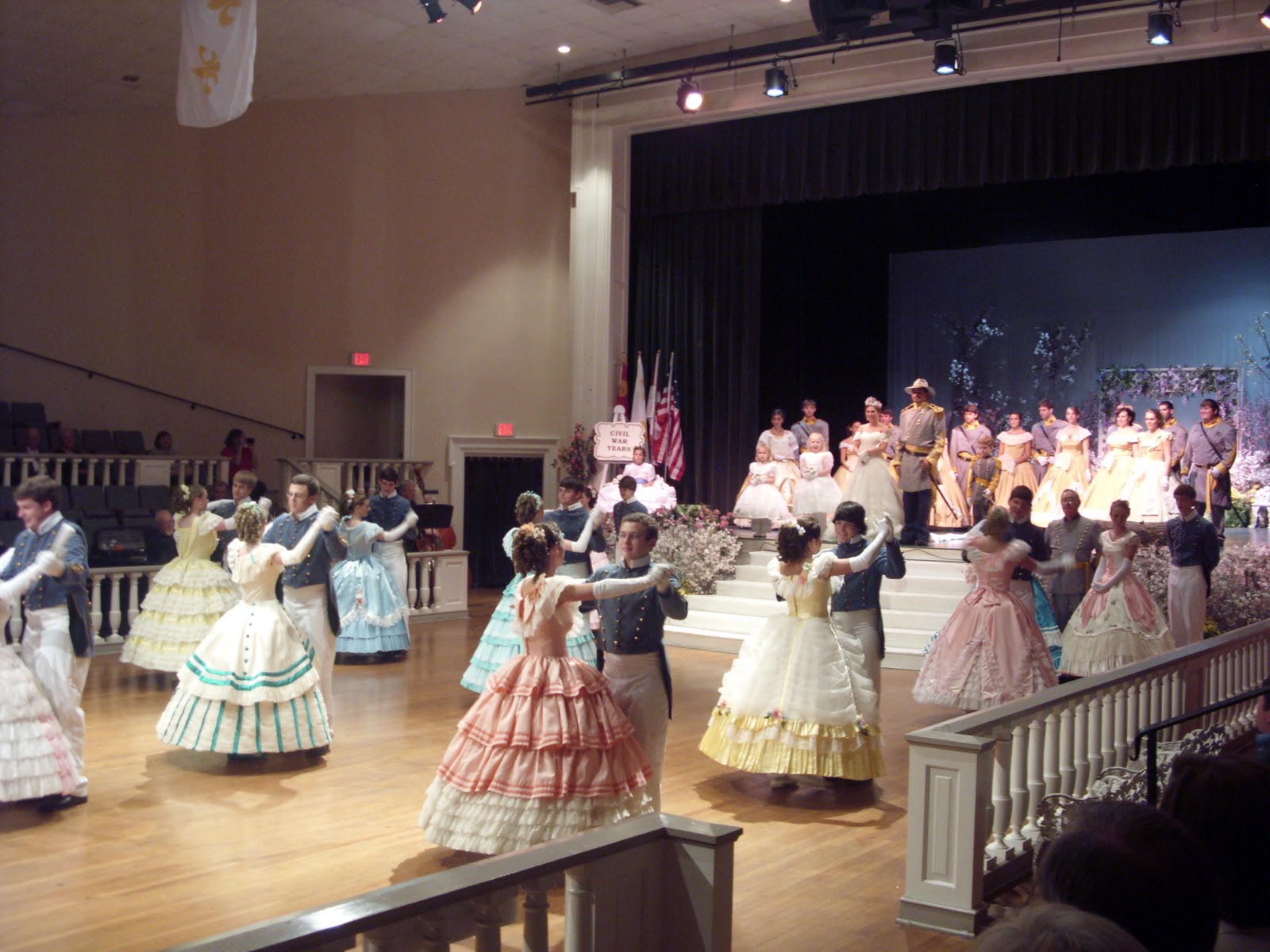
In "Making Place, Making Race: Performances of Whiteness in the Jim Crow South," Steve Hoelscher uses the landscapes and performances of white Southern memory in Natchez, Mississippi to show how a dominant group created a culture of segregation that far exceeded its legal boundaries, and how racialization of "everyday geographies" is constantly being both upheld and reworked. Hoelscher argues that modern American race relations have roots in the Southern past and especially in the Jim Crow past, so understanding the processes of Natchez' production of race in the landscape can help us understand racialization of American landscapes more generally.
Labels:
1930s,
1960s,
African American,
Cultural Geography,
heritage,
memory,
performance,
place,
place and region,
race,
the South,
whiteness
Friday, April 5, 2013
67: Janet Davis' The Circus Age
In The Circus Age: Culture and Society Under the American Big Top, Janet Davis shows that turn-of-the-century railroad circuses and wild west shows were central to the formation of a new, modern American nation-state because they presented an ambiguous picture of America that questioned, played with, and interrogated changing cultural norms.
Davis combines extensive archival work and interdisciplinary methodology to bring the world of the circus to life. She emphasizes the ways in which transvestites, weight-lifting women, near-naked star performers, and the constant display of married freaks and "abnormal" body types both heightened fears and expressed anxieties about transgression of gender roles within a raced and classed society. Daring white female riders and animal trainers were presented as dainty ladies despite the risks they took at work, while nonwhite performers were often presented with inverted gender roles and sexualized bodies in sideshow displays; race and class intersected to create a spectacle of gender transgression. She also shows how circuses played with their relationship to capitalism, both literally as sites of proletarianization and labor unrest (as well as sites of leisure where people went to escape industrialization) and figuratively as fantastic reconfigurations of imperialism in exotic locales.
Throughout, Davis balances performance (both literally and in the academic sense) with the physical production of the circus itself, including advertisements, transportation, and logistics, and she shows how the circus was as much a product of industrial capitalism and empire as it was an escape from the massive social upheavals and prevailing attitudes regarding race, class, and gender. The book also provides a particular historical answer to a major question in American Studies: by showing how American imperialism abroad intersects with social divisions at home.
Davis combines extensive archival work and interdisciplinary methodology to bring the world of the circus to life. She emphasizes the ways in which transvestites, weight-lifting women, near-naked star performers, and the constant display of married freaks and "abnormal" body types both heightened fears and expressed anxieties about transgression of gender roles within a raced and classed society. Daring white female riders and animal trainers were presented as dainty ladies despite the risks they took at work, while nonwhite performers were often presented with inverted gender roles and sexualized bodies in sideshow displays; race and class intersected to create a spectacle of gender transgression. She also shows how circuses played with their relationship to capitalism, both literally as sites of proletarianization and labor unrest (as well as sites of leisure where people went to escape industrialization) and figuratively as fantastic reconfigurations of imperialism in exotic locales.
Throughout, Davis balances performance (both literally and in the academic sense) with the physical production of the circus itself, including advertisements, transportation, and logistics, and she shows how the circus was as much a product of industrial capitalism and empire as it was an escape from the massive social upheavals and prevailing attitudes regarding race, class, and gender. The book also provides a particular historical answer to a major question in American Studies: by showing how American imperialism abroad intersects with social divisions at home.
Labels:
American Studies,
bodies,
capitalism,
circus,
Civil War to WWI,
culture,
escapism,
gender,
imperialism,
labor,
leisure,
modernity,
performance,
transportation
66: George Chauncey's Gay New York
George Chauncey's Gay New York: Gender, Urban Culture, and the Making of the Gay Male World, 1890-1940 uses archival and oral sources to debunk three myths about gay male culture in turn-of-the-century New York: the myth of isolation, the myth of invisibility, and the myth of internalization. In doing so, he shows that a well-developed gay culture existed in New York long before Stonewall. Further, by reconstructing the spaces, symbols, events and people that made up gay male culture from the turn of the century to WWII, he both establishes the social construction of a gay male identity and argues against any cultural analysis that posits linear progress or a liberation politics as a key component of this identity.
Chauncey studies the development of gay culture in four New York neighborhoods: the Bowery, Greenwich Village, Harlem, and Times Square, and tries to pinpoint the moments when a gay presence became visible in each. He bases his argument on a huge quantity of primary materials, including police and trial records, diaries, documents from the District Attorney's office and the city magistrate, records of the Society for the Suppression of Vice, the Committee of Fourteen, and anti-prostitution organizations, and old gossip sheets like the Broadway Brevities. And the worlds that he meticulously reconstructs from this mountain of empirical data reveal several unique cultural patterns: gay rituals and institutions that foster a collective identity, gay migration patterns that parallel ethnic migration patterns, a kind of semiotic ingenuity that allowed many men to lead double lives, and a consistent definition of homosexuality as the passive acceptance of penetration rather than as a desire for someone of the same sex. This behavior-based definition allowed working-class and middle-class men in modernizing New York to treat "fairies" in the same way that they would female prostitutes, while the myriad spaces of New York's permissive sexual underworld (including the rooms at the YMCA) allowed for a flowering of gay sexualities and sexual expression, especially during Prohibition. By the 1930s, pansy culture provided opportunities for voyeuristic escape from middle-class life, even as gay culture was increasingly seen as a threat to the post-Prohibition moral order.
Throughout, Gay New York builds an interpretation of culture from empirical evidence about particular spaces, performances, people, and objects in New York. Chauncey thus locates gay male culture in both a particular time and place and a particular social, economic, and cultural milieu: a modern New York grappling with the social upheaval of industrial capitalism.
Chauncey studies the development of gay culture in four New York neighborhoods: the Bowery, Greenwich Village, Harlem, and Times Square, and tries to pinpoint the moments when a gay presence became visible in each. He bases his argument on a huge quantity of primary materials, including police and trial records, diaries, documents from the District Attorney's office and the city magistrate, records of the Society for the Suppression of Vice, the Committee of Fourteen, and anti-prostitution organizations, and old gossip sheets like the Broadway Brevities. And the worlds that he meticulously reconstructs from this mountain of empirical data reveal several unique cultural patterns: gay rituals and institutions that foster a collective identity, gay migration patterns that parallel ethnic migration patterns, a kind of semiotic ingenuity that allowed many men to lead double lives, and a consistent definition of homosexuality as the passive acceptance of penetration rather than as a desire for someone of the same sex. This behavior-based definition allowed working-class and middle-class men in modernizing New York to treat "fairies" in the same way that they would female prostitutes, while the myriad spaces of New York's permissive sexual underworld (including the rooms at the YMCA) allowed for a flowering of gay sexualities and sexual expression, especially during Prohibition. By the 1930s, pansy culture provided opportunities for voyeuristic escape from middle-class life, even as gay culture was increasingly seen as a threat to the post-Prohibition moral order.
Throughout, Gay New York builds an interpretation of culture from empirical evidence about particular spaces, performances, people, and objects in New York. Chauncey thus locates gay male culture in both a particular time and place and a particular social, economic, and cultural milieu: a modern New York grappling with the social upheaval of industrial capitalism.
Labels:
American Studies,
class,
culture,
discourse,
escapism,
modernity,
New York,
performance,
sexuality,
spatial turn
Subscribe to:
Comments (Atom)


