
Showing posts with label Modernism. Show all posts
Showing posts with label Modernism. Show all posts
Wednesday, April 10, 2013
149: Cecelia Tichi's Shifting Gears

147: Terry Smith's Making the Modern

Tuesday, April 9, 2013
133: Edward Relph's Modern Urban Landscape

To collect data on the changes in urban architecture, planning, technology and social conditions since 1880, Relph takes the "geographical" approach of "watching:" he starts with "the totality of what I see," then follows "several directions more or less at once," looking for unusual details, new developments, and ironic juxtapositions within the larger context of the urban fabric. Landscapes, to Relph, are the "visual contexts of daily existence," and he insists on retaining the wholeness of the urban landscape because so much of landscape is about context, about the relationships between buildings and the streets and spaces and other structures around them, that you cannot study any one element in isolation. Only by preserving landscape's "fragile wholeness" can we hope to learn anything about how it functions.
Monday, April 8, 2013
126: Groth & Bressi's Understanding Ordinary Landscapes
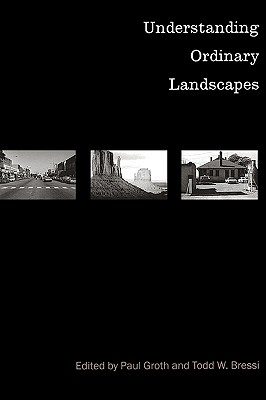
According to Groth, cultural landscape studies defines landscape as the combination of people and place, with an emphasis on the history of how people have used everyday or vernacular space - buildings, rooms, streets, fields, yards - to establish and articulate identities, social relations, and cultural meanings. When JB Jackson started publishing Landscape in 1951, he also emphasized the activist mission of cultural landscape studies: the more people know about ordinary environments, the more they will become attached to them and the less likely they will be to wantonly destroy them. Groth and Bressi build on cultural landscape studies via a 6-part framework updated for the 1990s:
- focus on ordinary landscapes to get at cultural meaning and environmental experience
- shift from a rural emphasis to both rural and urban landscapes, as well as landscapes of production and landscapes of consumption
- continue to study diversity and uniformity, but emphasize difference, fragmentation, intertextuality and hybridity instead of a single, unifying narrative
- continue to write for the intelligent lay reader
- support a broad notion of interdisciplinarity that includes cultural, human, social, critical, landscape architecture, art history and other approaches
- engage with visual and spatial information, either in support of or in direct opposition to it; the landscape must remain the primary object of study. Respect JB Jackson's argument that "landscape... must be regarded first of all in terms of living rather than looking."
This collection includes many heavyweights: David Lowenthal, Peirce Lewis, Dolores Hayden, Wilbur Zelinsky, and more - all folks who are contributing to and thinking about what a new cultural geography might mean and how it might be updated to include social difference and PoMo cultural theory. It also holds up JB Jackson as the methodological exemplar of cultural landscape studies - which makes sense, because as far as I know, he invented it.
117: Doreen Massey's For Space

Massey's For Space is an attempt to develop a theory of subjectivity/ agency through a postmodern conception of space as geographical, temporal, and relational. Because of Cresswell, I expected Massey’s construction of
“the spatial” as relational flows, especially in counterpoint to Harvey’s
construction of place as nodes where the flows of capital get stuck.
But I didn’t expect her to be so tightly
bound with high postmodern thinkers. Massey draws a great deal from Laclau & Mouffe’s radical democracy and Deleuze’s
reconfiguration of subjects from nodes to trajectories; I guess this is what
happens when you shift focus from bodies to space as the field where bodies interact. Of particular interest to me is her search
for agency/ construction of radical subjectivity as uniquely spatial,
outwardlooking and aware of its own relational constitution. Space, rather than time, makes agency possible.
Massey is trying to find a way to move beyond
Modernism, which (she says) falsely annihilates space through time, and beyond the
extremes of Postmodernism, which falsely annihilates time through space, and to
articulate depth with breadth. Yes, connecting depth with breadth is the project of all cultural theory, but her solution – to focus on
space-time as the product of relations/ interactions between heterogeneous
elements dissolves binaries like global/
local, place/space, space/time, and thereby makes space for agency. She does a better job of situating potential
agents within an uneven power grid than do Laclau & Mouffe/ other radical
democracy theorists, but I do wonder if she’s falsely assuming that everyone
would take freedom if given the space to do so - in which case she’s more of a product of the Enlightenment than she
cares to admit. (Not a bad thing to
think that all people are fundamentally equal on some level; I’m just
sayin…)
Anyway. I like that space and social relations are
mutually constitutive – the concept is very useful for talking about transportation-based
social movements. She’s also got a nice
discussion of how local movements might articulate into larger global struggles
that looks a lot like how (radical) transportation movements, by
their nature, have to grow. And she
clearly reads. A lot.
Originally published on 6.17.12.
Originally published on 6.17.12.
116: Doreen Massey's Space, Place, and Gender

Doreen Massey's Space, Place, and Gender is a collection of articles from the late 1970s to the 1990s, all of which attempt to formulate concepts of space and place in terms of social relations, class and gender in particular. Her basic arguments, many of which she develops later in For Space, have to do with the development of a decentered, relational, temporal/process-based, postmodern concept of space, and the mutually constitutive relationship between space and social relations/ inequalities. She sees
"space-time as a configuration of social relationships within which the
specifically spatial may be conceived of as an inherently dynamic
simultaneity. Moreover, since social
relations are inevitably and everywhere imbued with power and meaning and symbolism,
this view of the spatial is an ever-shifting social geometry of power and
signification.” (3)
Sunday, April 7, 2013
108: Marshall Berman's All That Is Solid Melts Into Air

Berman accepts that Modernism in the mid-20th century became the top-down, monolithic grand narrative that Postmodern theorists reject, but for his definition of Modernism he points instead to the 19th century, when Modernism was a way of making sense of a chaotic new "modern" world and asserting human agency in the face of totalizing industrial development. Modernism is a dialectic between top-down and bottom-up culture, and the Enlightenment project of Progress proceeds not in a
101: David Harvey's Condition of Postmodernity

- modernity was at once transient, fleeting, contingent AND eternal and immutable; the project of Modernism was effectively the last hurrah of the Enlightenment project: to create a scientific narrative of chaos that could both rationalize internal social fragmentation within a narrative of Progress AND break from the past
- Postmodernism, on the other hand, celebrates difference, fragmentation, and the vernacular; it is spatial and pragmatic rather than temporal and abstract, and it revels in chaos and complexity. As opposed to the Modernist city, the PoMo city is not divided into functional zones but instead develops by its own logic into something apolitically beautiful in its chaos.
- Both Modernism and Postmodernism are dialectically related to their particular "regime of accumulation," the particular configuration of capitalists, workers, state employees, financiers, and other political-economic agents that stabilizes the net product between consumption and accumulation. In the first half of the 20th century, Fordism kept the regime of accumulation stable by slowly shaping global mass-production and mass-consumption into a core/periphery model with the US in the center.
Tuesday, January 8, 2013
10: Claude Fischer's America Calling

America Calling is a social history of the telephone in America from 1900 to 1940, and it's an impressive piece of work. Fischer is a well-funded sociologist - which means that in addition to liking big structural arguments, clearly-defined terms, and general conclusions drawn from massive amounts of data, he also had an army of research assistants to help him with this project. And really, why do just one study when you have enough people to research and write five? Yes, five.
Fischer embarked on this project to answer three questions about the relationship between the telephone and American culture. First, who subscribed to residential telephone service, where did they live, and why did they get phones? Second, how did the collective use of the telephone affect social structure and culture? And third, what personal meanings did phones have for subscribers?
To answer these questions (again, because he had an army of assistants), he undertook the following studies:
- A historical study of how the telephone industry marketed phones to North American households, with particular attention to rural and working-class customers
- A statistical analysis of national diffusion patterns for telephone subscriptions over time to see where in the country people were likely to have phones, and whether phone subscriptions varied with class and rural vs local households
- Community studies in three communities in the San Francisco Bay area (Antioch, Palo Alto, and San Rafael), which included social histories for each town, statistical analyses of phone diffusion, and statistical analyses of social change
- Statistical analyses, also at the community level, of relationships between telephone subscriptions and a variety of indicators, like occupation, presence and number of adult women in the household, and distance from the city center
- Oral histories with 35 elderly people living in the three towns
And the result? After a lot of number crunching, Fischer determined several things, but two of his conclusions regarding social and cultural change particularly stand out (to me). First, rather than functioning primarily as a tool for business or as a replacement for human contact (as promoters intended and detractors feared), the telephone quickly became a "technology of sociability." Americans (especially women) discovered that telephones made organizing events and coordinating people much more efficient - and so they coordinated more events and thus raised their overall level of in-person socializing. Instead of replacing personal interaction, the telephone amplified it and thus contributed to the overall accelerated pace of modern life.
But the telephone wasn't all modern, all the time. Rather than operating as a tool of modernity by destroying local places and helping people connect with strangers in foreign lands (as telephone promoters initially claimed), the telephone was actually anti-modern; it helped people form closer bonds with people they already knew. It thus helped people create a bunch of small, insular, place-bound parochial cultures instead of contributing to the growing mass culture
Both of these conclusions are really fascinating because they show that people used telephones to help them adjust to the upheavals of modernization, and that they were happy to do more things as long as they had the support and close contact of a small group of friends. The strange thing about all of this is that Fischer insists that the telephone didn't change American culture in any significant way (when it obviously did.) I'm hoping he just means that people used it to satisfy existing needs rather than to create new ones.
Saturday, June 23, 2012
J. Nicholas Entrikin - The Betweenness of Place

As far as Modernism goes: modernity is a dialectic b/n the Enl binaries of obj and subj, and our goal is to mediate between the two and stop swinging back and forth between binaries. Would it be fair to say that he’s one of those people that sees PoMo as part of the larger picture rather than its own thing?
Thursday, June 14, 2012
Lewis Mumford - The City in History

Mumford is such a lovely writer, and it's easy to think that what he lacks in primary research he more than makes up for in thought-provoking speculation. He's a utopian thinker who advocates a balance between humans and their environment in the form of decentered, thoughtful, federated social structures. He also writes a lot about the relationship between space and technology. This book is a ginormous grand narrative of "the city" in Western civilization, from the very dawn of time to the present, so here are just a few of my notes:
In an era shaped by white flight, deindustrialization/ suburbanization, not to mention the fear of nuclear war, Mumford calls for a return to city building instead of
destruction. He argues that cities serve two main purposes: religion and the
state. Biology is a (distant?) third,
though really cities are for the people, so people should come first. The shrine and the citadel are its two dominant structures, carried over
from villages. The city exists to
nurture human biological and cultural reproduction, not to use technology to
tame whole populations into submission. The city is the stand-in for society, and he is very adamant that spatial forms and social forms
interconnect. Also, space and the built environment are articulated with technology;
humans shouldn’t be afraid of their own inventions or let a few wackos use
technology to control them. The city
should be humanity, magnified; communality, nurturing, love. I sense Hardt & Negri here, where a
surplus of love and community lead to a radical democracy, and also the dread fear of totalitarianism and
technology, which apparently went hand-in-hand in WWII, what with the Nazis and
all.
Saturday, June 9, 2012
virginity, guilt, and suburbia?
The virgin sidewalk – the physical embodiment of
sprawl’s guilty conscience – reveals the true failure of suburbia, a landscape in
which automobile use is a prerequisite to social viability.
Duany, Andres, Elizabeth Plater-Zyberk, and
Jeff Speck. Suburban Nation: The Rise of Sprawl and the Decline of the American
Dream. New York: North Point Press,
2000.
Wednesday, June 6, 2012
inefficiency makes people grouchy
In sum, according to these visions, water should
return to the height from which it falls, motive power or force should not be
wasted, machine theories should address mechanical practice, workers should do
as they are told, struggle should yield better-adapted forms of life, people
should control themselves, and inhumane practices should be inefficient.
Alexander, Jennifer Karns. The
Mantra of Efficiency: From Waterwheel to Social Control. Baltimore: The Johns Hopkins University
Press, 2008, p 164.
Subscribe to:
Posts (Atom)