
Showing posts with label place. Show all posts
Showing posts with label place. Show all posts
Tuesday, April 9, 2013
129: Dolores Hayden's The Power of Place

128: Tim Cresswell's On the Move

For Cresswell, mobility is actually three mobilities that mutually constitute one another.
- Empirical mobility is the actual movement of people, things, birds, etc.; it is the closest to actual movement and thus the most abstract (because it traces displacement, not necessarily the meaning of displacement.)
- Representations of mobility are the photos, literature, philosophy, etc., that capture mobility and try to make sense of it, usually in ways that are ideological. They might link mobility to freedom, transgression, creativity, life and so on. They reproduce mobility and interpret it according to a particular worldview.
- Experienced mobilities are mobilities that are practiced, embodied, ways of being in the world, as well as how we experience and feel about mobility.
Mobility is both subjective and objective, and the perspective from which we experience/ study mobility has a lot to do with how we interpret it. Because mobility is both subjective and objective, it is also both socially constructed and universal, in the sense that everything moves, and the interplay between this universal fact of life and a particular movement within a particular context gives that movement meaning. Mobility is thus a "necessary social production," and a way of inextricably integrating geography with the politics of social life.
Cresswell's writing style is wonderfully clear and engaging, and his many case studies, as well as his brief history of the development of mobility into an individual right in the modern capitalist state, cover mobility at a variety of scales ranging from the individual to the workplace to nation, empire, and the placeless place of the Shiphol Airport. The only thing missing, maybe, is a study of imperial movement from the perspective of the colonized, with some attention to the relationship between labor migration and uneven development.
Monday, April 8, 2013
124: Duncan & Duncan: Landscapes of Privilege

- "the ways people produce their identities in and through places, especially homeplaces, such as houses, gardens, and home communities," particularly some of the more “conservative, defensive attempts at using one’s surroundings to establish individual, family, and community identities…. against and in contrast to an outside world” or ‘constitutive outside.’
- the effects, intended and unintended, of a virulent, reactionary politics of anti-development in Bedford in response to all the stars moving in and buying up properties
- the role of Bedford landscapes as symbolic resources used in the quest for social distinction: how residents are invested in Bedford socially, psychologically, economically
120: Yi-Fu Tuan's Topophilia

Although Topophilia intentionally does not have a stated method, it does have a theoretical framework. Tuan sets out to examine environmental perception and values at the levels of the species, group, and individual; to hold culture (or topophilia) distinct from the environment to show how
119: Yi-Fu Tuan's Space & Place

From my notes from Spring 2012:
In Space and Place, Yi-Fu Tuan develops
three themes: the relationship between space and the human body; the
relationship between place and space; and the range of human experience or
knowledge of space and place. He argues
that human experience of the world (in all its fullness) both shapes and is
shaped by space and place. Tuan develops
this humanist argument against more abstract geographical conceptions of space;
this book is generally considered to be the first “human geography” book. For Tuan, experience is both feeling and
thought. Experience consists of all the
myriad ways in which humans interact with their environment: via the body (the
five senses, along with “sensorimotor,” moving through a space, and “skin”),
via the imagination (including myths, fantasy, narration, memory), and
conceptually or rationally (a big-picture, god’s-eye view). Space is more abstract, something that you
move through and dominate; think openness, spaciousness. Places “stay put;” they acquire value when
humans pause in their movements through space and stop to experience them, to
create memories there, or to otherwise create links between themselves and a
physical location. While a single human
experience cannot possibly encompass the complexity of the real world, full
experience of space and place, is integral to the development of human
consciousness and culture and to the reintegration of body and mind
(discourse).
118: Michel de Certeau's The Practice of Everyday Life

In The Practice of Everyday Life, Michel de Certeau argues that far
from being a passive act, consumption, whether as use of an object or space,
“ways of operating,” or art/ “ways of making” (combination, selection,
cut-and-inversion), is a kind of spatial production.
Building on (but rejecting) Foucault,
Bourdieu, Kant, and others, de Certeau conceives of the physical world as
divided into two classes: those with power and capital who are in control of
space and production, and those with neither, but who exercise their agency by
taking advantage of opportunities and consuming creatively. The powerful side of things is also the
scientific, the rational; this side creates static places of power,
characterized by rational utopian uniformity, legibility, clarity, strategy, and
centralized control. The weak consumers
take advantage of cracks in the rational system of these places; dependent on
time, these peripatetic storytellers (walking and narration are inseparable)
combine the fixed elements of the city/story with memories and inventions
triggered by circumstance and audience to subvert the rational powers and
create something new.
117: Doreen Massey's For Space

Massey's For Space is an attempt to develop a theory of subjectivity/ agency through a postmodern conception of space as geographical, temporal, and relational. Because of Cresswell, I expected Massey’s construction of
“the spatial” as relational flows, especially in counterpoint to Harvey’s
construction of place as nodes where the flows of capital get stuck.
But I didn’t expect her to be so tightly
bound with high postmodern thinkers. Massey draws a great deal from Laclau & Mouffe’s radical democracy and Deleuze’s
reconfiguration of subjects from nodes to trajectories; I guess this is what
happens when you shift focus from bodies to space as the field where bodies interact. Of particular interest to me is her search
for agency/ construction of radical subjectivity as uniquely spatial,
outwardlooking and aware of its own relational constitution. Space, rather than time, makes agency possible.
Massey is trying to find a way to move beyond
Modernism, which (she says) falsely annihilates space through time, and beyond the
extremes of Postmodernism, which falsely annihilates time through space, and to
articulate depth with breadth. Yes, connecting depth with breadth is the project of all cultural theory, but her solution – to focus on
space-time as the product of relations/ interactions between heterogeneous
elements dissolves binaries like global/
local, place/space, space/time, and thereby makes space for agency. She does a better job of situating potential
agents within an uneven power grid than do Laclau & Mouffe/ other radical
democracy theorists, but I do wonder if she’s falsely assuming that everyone
would take freedom if given the space to do so - in which case she’s more of a product of the Enlightenment than she
cares to admit. (Not a bad thing to
think that all people are fundamentally equal on some level; I’m just
sayin…)
Anyway. I like that space and social relations are
mutually constitutive – the concept is very useful for talking about transportation-based
social movements. She’s also got a nice
discussion of how local movements might articulate into larger global struggles
that looks a lot like how (radical) transportation movements, by
their nature, have to grow. And she
clearly reads. A lot.
Originally published on 6.17.12.
Originally published on 6.17.12.
116: Doreen Massey's Space, Place, and Gender

Doreen Massey's Space, Place, and Gender is a collection of articles from the late 1970s to the 1990s, all of which attempt to formulate concepts of space and place in terms of social relations, class and gender in particular. Her basic arguments, many of which she develops later in For Space, have to do with the development of a decentered, relational, temporal/process-based, postmodern concept of space, and the mutually constitutive relationship between space and social relations/ inequalities. She sees
"space-time as a configuration of social relationships within which the
specifically spatial may be conceived of as an inherently dynamic
simultaneity. Moreover, since social
relations are inevitably and everywhere imbued with power and meaning and symbolism,
this view of the spatial is an ever-shifting social geometry of power and
signification.” (3)
115: Lucy Lippard's The Lure of the Local

In an increasingly globalized world, for Lucy Lippard, the "lure of the local" is
the pull of place that operates on each of us, exposing our politics and our spiritual legacies. It is the geographical component of the psychological need to belong somewhere, one antidote to a prevailing alienation. The lure of the local is that undertone to modern life that connects it to the past we know so little and the future we are aimlessly concocting.
113: Steve Hoelscher's Making Place, Making Race
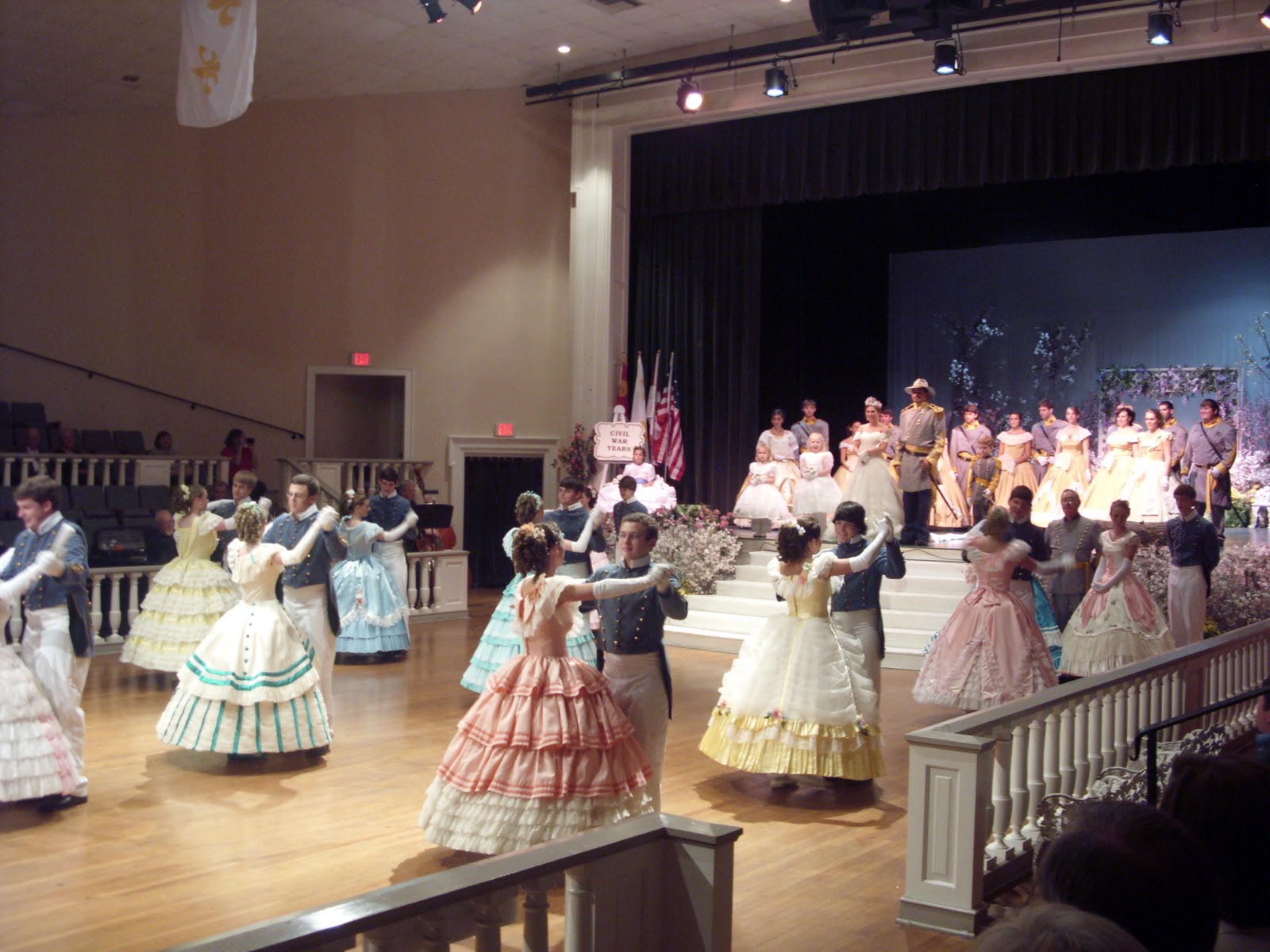
Hoelscher relies on a wide variety of sources, including ethnographic research and interviews in Natchez, archival sources, including pamphlets, letters, ads, and photos, and secondary and archival sources on lynching, residential segregation, and other evidence of racialization on the landscape.
110: David Delaney's Race, Place and the Law

Delaney argues that racism from 1836-1948 was spatialized, or enacted on and through the landscape, and supported by the legal system. Spatialized racism changed dramatically over time, however. Before the Civil War, it generally took the form of white territoriality versus black mobility - as evinced, for instance, in cases where
Sunday, April 7, 2013
109: Tim Cresswell's Place

The three levels of place:
- Descriptive; visual; surfaces
- Social construction; practice; social difference
- Phenomenological; essential; humanist; universal
At one point or another, cultural geography has embraced one or more of these levels.
106: Neil Smith's American Empire

American Empire proceeds both temporally and geographically. Temporally, Smith identifies three nodes or "formative moments" in the US rise to globalism:
- WWI and Wilson's League of Nations; the US gets more ambitious than it had been in 1898, and dreams of continuing its imperial acquisitions; this dream is deferred
- WWII; by the end of the war, Henry Luce's 1941 claim that this was the "American Century" seemed to ring true; from 1945-1970s US capital and culture flourished and spread
- Smashing the Berlin Wall/ sacking Baghdad in 1989/1991; after economic setbacks in the 1970s and 1980s from strengthening global competition, deregulation, the "withering" of the Japanese challenge in the 1990s, reconstruction of the US economy and the end of official communism all seemed to signify a "new world order," strengthened by a renewed interest in geography in the 1970s and 1980s.
102: Henri Lefebvre's The Production of Space

Henri
Lefebvre’s vast, multifaceted The
Production of Space could probably be said to advance any number of
arguments, but I think his most compelling argument is the one that brings
space and knowledge into a classical Marxist framework: capitalist Western
society is moving from the production of things in space to the production of
space itself, which means that capitalist powers are increasing their hold and
surveillance on ordinary people (aka space is now shaping the working
class). However, all is not lost: no
matter how much they try, the people who build and shape “dominant” space and
employ the working class can’t squeeze the working class out of existence or
keep them from “appropriating” and shaping space to suit their own needs, nor
can they make the world a completely visual, timeless, ideological
construct. Regular people have bodies,
and we live in specific places at specific historical moments, and we shape
those places (yeah, I said places, not spaces) into unique, historical “works
of art” that contrast with the partially commodified built environment
constructed by the ruling class. To say
that capitalism has moved beyond the product to space itself is to argue for
both an increasing attempt at totalizing control of society through space AND
increased resistance from the people who live in, experience, and shape that
space – with the potential for a socialist revolution where appropriated spaces
based on the human body/lived experience and use-value take precedence over
dominant, visual spaces and exchange-value.
101: David Harvey's Condition of Postmodernity

- modernity was at once transient, fleeting, contingent AND eternal and immutable; the project of Modernism was effectively the last hurrah of the Enlightenment project: to create a scientific narrative of chaos that could both rationalize internal social fragmentation within a narrative of Progress AND break from the past
- Postmodernism, on the other hand, celebrates difference, fragmentation, and the vernacular; it is spatial and pragmatic rather than temporal and abstract, and it revels in chaos and complexity. As opposed to the Modernist city, the PoMo city is not divided into functional zones but instead develops by its own logic into something apolitically beautiful in its chaos.
- Both Modernism and Postmodernism are dialectically related to their particular "regime of accumulation," the particular configuration of capitalists, workers, state employees, financiers, and other political-economic agents that stabilizes the net product between consumption and accumulation. In the first half of the 20th century, Fordism kept the regime of accumulation stable by slowly shaping global mass-production and mass-consumption into a core/periphery model with the US in the center.
99: Domosh & Seager's Putting Women in Place

Home: history and analysis of a space almost universally associated with women. Focusing on England and the US form the 17th century on, they show how the emerging capitalist system separated the male world of production from the female world of reproduction, from the Victorian cult of domesticity to mid-century suburbia. They then interrogate the raced and classed connections between notions of domesticity and turn-of-the-century social engineering projects aimed at "Americanizing" urban working-class and immigrant women and rural Native American women.
98: Adams, Hoelscher & Till's Textures of Place

- setting up a dialectic between physical places and human experience of/ apprehension of/ construction of places
- rejecting the search for universal understandings of place (a la Tuan) in favor of multiple meanings shaped by both individual subjectivities and social differences, including race, class, gender, and sexuality
- putting places in social, geographical, and historical context
Friday, April 5, 2013
68: Elizabeth Engelhardt's Tangled Roots of Feminism

The basic premise of ecological feminism is that there is no separation between humans and nature. Humans and non-humans have a reciprocal relationship, where "self-Other" is replaced with "self-another" and both parties must take care of one another and help preserve the total ecology. As the least-empowered in society, women can and must look out for the least-empowered in the total ecological system. Therefore, all feminist activism must lead to long-term community stability, both environmentally and socially. Ecological feminism in Appalachian women's writing thus led to critiques of capitalism and American corporations, as well as of any social structures that used hierarchies (race, gender, class, species, etc) to oppress, silence, or damage community members. In defining ecological feminism, Engelhardt is careful to note that this is not an essentialist project; feminism and turn-of-the-century womanhood were not the same for all women, and activism took many historically specific forms.
Monday, April 1, 2013
35: Patricia Limerick's Legacy of Conquest

Much of the book, then, involves dispelling myths of the Old West by retelling the history of the West from a variety of perspectives. Limerick investigates the ideology of Western independence, which can only exist in a national and international context; real estate and property as the emotional center of Western history; and writing mining as labor history. Most importantly - she spends the second half of the book writing a history of the West from Native Americans' perspective. While she pulls from Native sources somewhat, her main strategy is to read Anglo sources from a Native American perspective; the result is a portrayal of resentful people reduced to dependency on a single centralized agency, choosing rationally from among a dwindling number of opportunities.
With this new, synthetic history of the West as a place instead of a mobile frontier or a cowboys-and-indians fantasyland, Limerick argues that the West is a "place undergoing conquest and never fully escaping its consequences," and that "Western history has been an ongoing competition for legitimacy - for the right to claim for oneself and sometimes for one's group the status of legitimate beneficiary of Western resources." In other words, the West has long been shaped by a competition between different ethnic groups for property rights, even as the Western frontier functions as a kind of creation myth for white America. This book thus complicates American narratives of Progress and manifest destiny even as it reclaims the West for historical study.
Sunday, January 20, 2013
21: Mitchell Duneier's Sidewalk

Mitchell Duneier is a sociologist who uses what he calls "diagnostic ethnography" to study the lives of poor, black, urban people. In Sidewalk, he focuses on three blocks of Sixth Avenue in Greenwich Village, where a group of magazine and book vendors, scavengers, panhandlers, movers, and assistants form a complex social network that has ties to both the formal and informal economies. Duneier is interested in the moral choices his subjects make within the constraints of larger racial, political, and economic structures, but he is also deeply committed to helped these people get their voices heard; this commitment, and the respect that it entails, is what really makes this book for me.
It took Duneier 7 years to research Sidewalk. He began by making contact with Hakim Hasan, a well-read vendor who specialized in "black books," and Hasan introduced him to other vendors, who in turn connected him with their assistants and eventually with the panhandlers who sometimes work with them to make a little extra money. Three years in, he began working for Marvin, a magazine vendor, during summers, and he also started leaving a tape recorder on at his table all day so that his transcriptions could be faithful to the original conversations. He interviewed a wide variety of people, from influential lawyers and city officials to pedestrians, regular customers, vendors, and relatives of the vendors, and he corroborated vendors' accounts with those of others wherever possible. He also worked with Ovie Carter, a Pulitzer Prize-winning photographer for the Chicago Tribune, to create a photographic record of the blocks, so that photographs and text could inform one another. And whenever he felt he needed to explain a phenomenon in larger structural terms (the self-respect vendors got by bargaining with customers, for instance) he delved into whatever relevant research he could find to help him make connections (in this case, he used research about the relationship between worker satisfaction and self-direction.) This wide variety of methods and sources allow him to reconstruct both the individual people he worked with and the larger structures in which they operate.
His discussion of the "Fuck it!" attitude discussed by many of his subjects is a case in point. After noticing that saying "Fuck it!" seemed to have a pattern to it, especially for the unhoused people he spoke to, he began to ask them what they meant. They told him that people who espoused this attitude often recognized that their addiction to drugs or alcohol played an active role in their becoming unhoused, and they talked about having finally given up trying to maintain their former lifestyle - saying "Fuck it!" For these people, this attitude had several consistent components and was directly related to their homelessness: pervasive application to all areas of their lives; embarrassment or shame, and hope that their loved ones don't see them in their new state; indifference to behavior that the person once saw as necessary or natural, like sleeping in a bed or urinating in a toilet; and the freedom they gained from having let go of their responsibilities to other people. There were also different levels of "Fuck it!" which ranged from ignoring family responsibilities to actively stealing from others. For these people, saying "Fuck it!" was a way of regaining a small amount of control over a life that was rapidly spinning away from them; it was also, in the eyes of the people to whom he spoke, something their community helped them avoid, because it was destructive on both an individual and a social level. Duneier reads into this discussion not a judgment against addiction or homelessness but a strong community that works together to combat depression and excessive drug use, and a support network that works with the few resources it has to keep its members afloat.
Duneier's respect for his subjects is visible in other places as well. He respected the many hours they gave him for interviews, and returned the favor by paying them for their time. He eventually chose to tape record their conversations so that their words wouldn't fall prey to his own recall errors. He asked Hasan, his original contact, to co-teach a seminar with him and secured him a semester-long lecturer position to do so. When he had finished the manuscript, he sat down with every single person he had interviewed, showed them where they were in the book, and made sure his representations were accurate. As a result, he was able to use real names for almost all of his subjects. And, by way of thanks, he returned his publisher's advance and a portion of the book's royalties to 21 prominent figures on the sidewalk.
And, perhaps most respectful of all, he reminds his readers that he cannot speak for his subjects, that he was never quite sure how much of their trust he had earned, and that no one, not even a sociologist, can truly know what is going on inside another person's head. He emphasizes these points to argue that racial, class, and cultural divides are sometimes insurmountable, but, truthfully, I can't think of a better way to level the playing field.
Subscribe to:
Posts (Atom)